
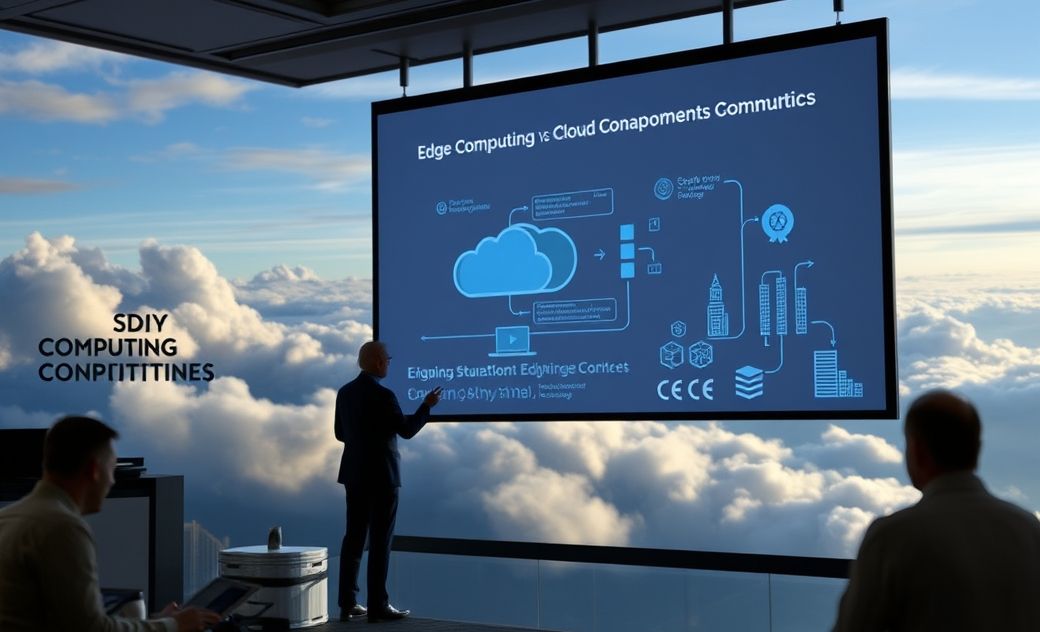
In the rapidly evolving world of technology, businesses continuously strive to leverage infrastructure to enhance efficiency and competitive advantage. Within this context, both edge computing and cloud computing have emerged as pivotal frameworks. While cloud computing has been a mainstay for data storage and processing, edge computing brings data processing closer to the source of data generation. Understanding the differences between these technologies and how each can benefit a business is crucial for making informed infrastructural decisions.
Understanding Cloud Computing
Cloud computing is a method of delivering various services over the Internet. It includes servers, storage, databases, networking, software, and more — all provided remotely by cloud service vendors. It emphasizes scalability, flexibility, and cost-efficiency.
Scalability and Flexibility
One of the major benefits of cloud computing is its capacity to scale resources as per demand. Businesses can easily adjust their resources, allowing for flexibility in operations and responsiveness to market changes. Moreover, cloud platforms often offer a variety of services customizable to the specific needs of a business.
Cost Efficiency
Cloud computing generally reduces the need for extensive on-premises hardware and its associated overhead costs. The pay-as-you-go pricing model allows businesses to pay only for the resources they actually use, optimizing IT budget expenditures.
The Emergence of Edge Computing
Edge computing is a distributed computing paradigm that brings computation and data storage closer to the data sources. This proximity to the source of data generation is its defining feature, as it tackles latency and bandwidth use challenges inherent in cloud models.
Reduced Latency
By processing data near the origin, edge computing significantly reduces latency. For operations needing immediate data processing and real-time responses, such as autonomous vehicles or industrial IoT devices, edge computing provides an ideal solution by minimizing delays.
Bandwidth Optimization
As businesses generate enormous amounts of data, transferring all this data to cloud data centers can strain network bandwidth. Edge computing alleviates this by processing data locally, filtering and sending only essential data to the cloud, optimizing bandwidth use.
How Businesses Can Benefit from Both Technologies
In determining a strategy for data processing infrastructure, businesses can choose to leverage the strengths of both cloud and edge computing. The decision should be guided by their operational needs, considering factors such as the nature of the data, required processing speed, and available resources.
Hybrid Solutions
Many companies opt for hybrid solutions that integrate both cloud and edge computing. This approach balances the immediate data processing capabilities of edge computing with the scalability and long-term storage benefits of cloud computing. It offers a customized solution aligning with diverse business demands.
Enhanced Business Agility
Combining both technologies enables businesses to respond quickly to changing environments and customer needs. They can integrate real-time analytics capabilities with robust cloud computing resources—enhancing decision-making and business operations.
Conclusion
The decision between edge computing and cloud computing doesn’t have to be an either-or choice. Businesses increasingly find benefit in integrating both technologies to capitalize on their respective advantages. By evaluating business priorities and infrastructure capabilities, enterprises can deploy a computing strategy that fuels innovation, reduces operational costs, and enhances customer satisfaction. As the technology landscape continues to evolve, staying informed and agile with technology choices will be key to maintaining a competitive edge.
