
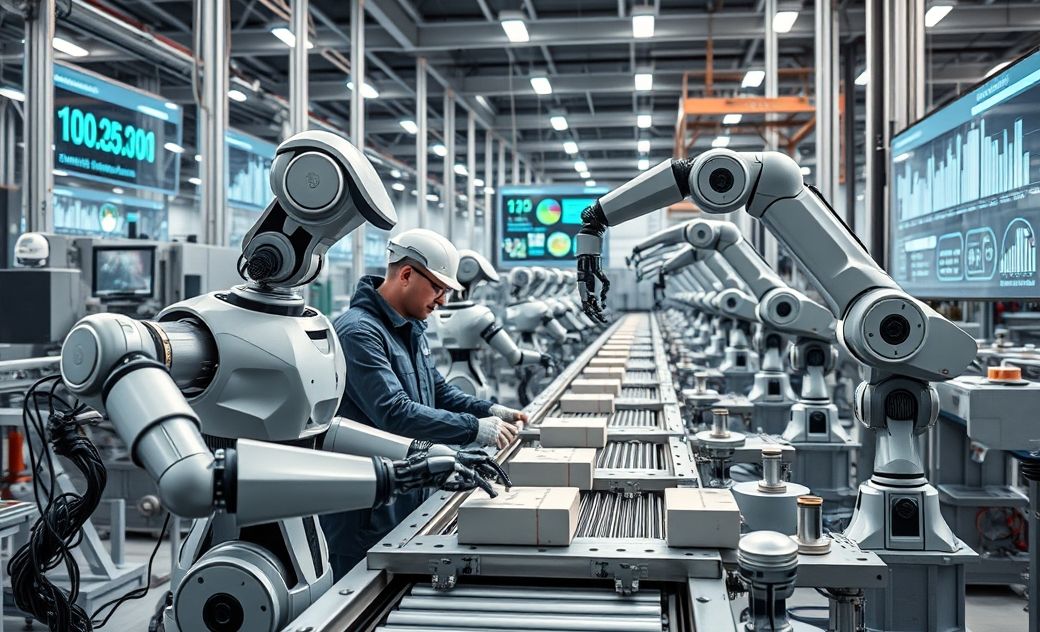
In the rapidly evolving landscape of modern industry, robotics in manufacturing stands out as a pivotal advancement, driving both efficiency and innovation to unprecedented heights. The integration of robotic technology has redefined production processes, offering competitive advantages and reshaping traditional manufacturing methods.
The Role of Robotics in Manufacturing
Robotics in manufacturing encompasses the use of automated systems to perform production tasks that were traditionally carried out by humans. This shift is largely due to the ability of robots to work tirelessly with precision, speed, and consistency, qualities that directly impact productivity and quality.
Automating Repetitive Tasks
One of the primary applications of robotics within manufacturing is the automation of repetitive tasks. Robots are particularly well-suited for monotonous and hazardous jobs, allowing human workers to focus on more complex and creative aspects of production. This not only increases the efficiency of operations but also enhances worker safety and job satisfaction.
Enhancing Production Quality
Precision is a hallmark of robotic performance. In manufacturing, even the smallest error can lead to significant setbacks. Robots reduce the likelihood of human error, ensuring consistent and high-quality output. They are adept at performing delicate tasks, such as assembling intricate electronics, with unmatched accuracy.
Innovations Spurred by Robotics
Beyond enhancing efficiency, robotics paves the way for innovative breakthroughs in manufacturing processes and product offerings. The integration of advanced technologies such as artificial intelligence and machine learning has led to the development of smart robotics that can analyze data and adapt to new scenarios, further pushing the boundaries of innovation.
Flexible Manufacturing Systems
Robotics enables the creation of flexible manufacturing systems that can be quickly adapted to produce different products or variations. This agility is crucial in today’s fast-paced markets, where consumer demand can shift rapidly. With robotic assistance, manufacturers can retool production lines with minimal downtime, catering to dynamic market needs and reducing time-to-market.
Cost-Effectiveness and Sustainability
Robotic systems can significantly decrease production costs by reducing waste, optimizing resource usage, and lowering labor expenses. Furthermore, they contribute to sustainability efforts by minimizing material waste and energy consumption. This not only enhances the company’s bottom line but also supports environmental responsibility initiatives, aligning with global sustainability goals.
The Future of Robotics in Manufacturing
Looking ahead, the role of robotics in manufacturing is set to expand even further. Future advancements will likely focus on improved human-robot collaboration, enabling a synergistic workflow where machines and workers complement each other’s strengths. Additionally, the rise of the Industrial Internet of Things (IIoT) is expected to create a more connected and responsive manufacturing environment.
Integration with Emerging Technologies
The integration of robotics with emerging technologies such as augmented reality and virtual reality holds promise for enhancing operator training and maintenance protocols. Through simulated environments, workers can interact with robotic systems, gaining hands-on experience without the risk of operational downtime.
Customization and Personalization
As robotics technology becomes more sophisticated, the ability to produce customizable products will become increasingly refined. Personalized manufacturing is poised to become the new standard, empowering consumers to have a hand in the design of their products, all while maintaining the efficiency benefits of large-scale production.
In conclusion, robotics is not just a tool for current manufacturing challenges, but a catalyst for future transformations. As the industry continues to embrace these technologies, it promises to usher in an era of unprecedented efficiency, quality, and innovation. The ongoing evolution of robotics in manufacturing will undoubtedly continue to shape the future of industry on a global scale.
