
Introduction
Electric gates provide a convenient way to control access to homes, offices, warehouses, and other properties in Adelaide. With the push of a button, a motorized gate can open or close without requiring you to leave your vehicle. Modern electric gates also improve security, privacy, and property appeal. However, like any mechanical and electrical system, an automated gate can develop faults over time. Small problems may start with unusual noises or slower movement and later become a complete system failure. Knowing the early warning signs can help you arrange repairs before the problem becomes more expensive or creates a security concern. When an automatic gate begins behaving differently, contacting an electric gate repair specialist in Adelaide can help identify the cause and restore safe operation.
Electric gates depend on several connected parts, including motors, control boards, sensors, remotes, safety devices, tracks, hinges, rollers, and electrical connections. A fault in one component can affect the entire system. Adelaide weather conditions, dust, moisture, regular use, accidental impacts, and normal wear can all contribute to gate problems. While some minor maintenance can be handled by property owners, electrical and motor-related faults should generally be assessed by a trained professional. Understanding the most common signs of electric gate trouble makes it easier to know when professional assistance is needed.
The Gate Opens or Closes More Slowly Than Usual
A noticeable change in gate speed is one of the earliest signs that an automated gate may need attention. An electric gate should normally operate at a consistent speed suitable for its design. If it suddenly takes much longer to open or close, the issue could be related to the motor, gears, rollers, hinges, tracks, power supply, or control system. Dirt and debris can also increase resistance, forcing the gate motor to work harder than normal. Ignoring this change can place additional stress on the motor and other moving components, potentially turning a relatively simple repair into a more serious breakdown. An electric gate repair specialist in Adelaide can inspect the complete operating system and determine whether the problem is mechanical, electrical, or both.
Slow movement can also become a safety issue. A gate that struggles to move may stop halfway, reverse unexpectedly, or fail to respond correctly to safety sensors. This can create problems for vehicles, pedestrians, children, and pets around the entrance. Professional gate technicians can check motor performance, alignment, tracks, hinges, rollers, and electrical controls to find the underlying cause rather than simply treating the visible symptom. Regular servicing can also help identify worn components before they cause a complete gate failure. If your automatic gate has gradually become slower or sounds as though it is working harder than before, it is worth arranging an inspection.
Unusual Sounds Coming From the Gate Motor
Electric gates should produce some operating noise, but sudden grinding, squealing, clicking, rattling, or banging sounds should not be ignored. Strange noises often indicate that a component is under stress or has started to wear. For example, grinding may point to a mechanical issue inside the drive system, while squealing can be associated with friction in hinges, rollers, or other moving parts. A repeated clicking sound could involve a control component, relay, sensor, or motor attempting to operate without completing the movement. The exact cause depends on the type and design of the gate, which is why professional diagnosis is important.
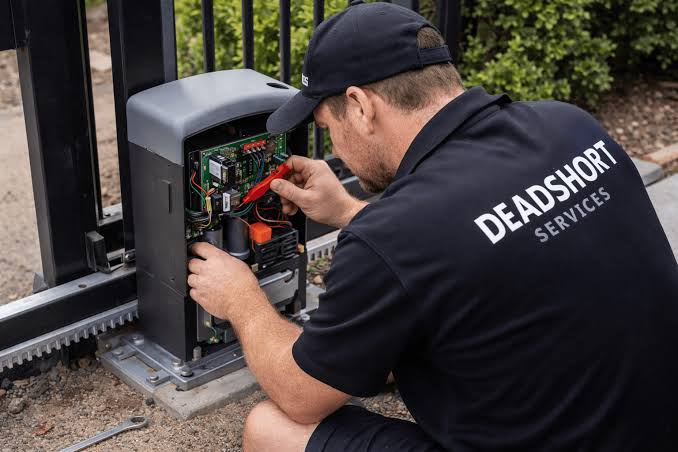
Trying to ignore unusual sounds can increase the risk of additional damage. When a motor continues operating against excessive resistance, internal components may experience unnecessary strain. A qualified electric gate repair specialist in Adelaide can listen to the operating system, inspect moving parts, test electrical components, and identify where the noise is coming from. Early repairs can protect the motor and extend the useful life of the entire automated gate system. Homeowners should avoid opening electrical control boxes or attempting complex motor repairs without suitable training, as incorrect handling can create safety risks.
The Remote Control or Keypad Stops Working Properly
Remote controls and keypads are essential parts of many automatic gate systems. When a remote suddenly stops working, the first possibility may be a simple battery issue. However, repeated remote failures or a gate that responds inconsistently can indicate a deeper problem. Faults may involve the receiver, wiring, control board, programming, antenna, power supply, or communication between the access device and gate controller. If several remotes experience the same problem, the issue is more likely to involve the gate system itself rather than individual batteries.
A keypad that works only sometimes can also create frustration and security concerns. Property owners may find themselves manually opening the gate, leaving the entrance unsecured, or repeatedly entering access codes without receiving a response. A professional technician can test the access control system and determine whether reprogramming, component replacement, wiring repair, or another solution is required. An electric gate repair specialist in Adelaide can also inspect whether the remote receiver and safety controls are communicating correctly with the main control board. Fixing the underlying problem is usually more reliable than repeatedly replacing batteries or resetting the system.
The Gate Stops Halfway or Reverses Unexpectedly
A gate that stops before reaching its fully open or closed position deserves prompt attention. The problem may be caused by an obstruction, misalignment, damaged track, faulty limit switch, motor issue, sensor problem, or control-board fault. Safety sensors are designed to prevent the gate from continuing its movement when an obstacle is detected. While this feature is important, a faulty or incorrectly positioned sensor can cause unnecessary stopping or reversing even when the pathway is clear. This can make the gate difficult to use and may indicate that its safety system needs professional testing.
Unexpected movement should never be treated as a normal part of automatic gate operation. A gate that reverses without an obvious reason may have a sensor alignment problem or another control fault. Continuing to operate it without investigation could increase wear and create a potential safety hazard. A qualified gate technician can inspect sensor positioning, travel limits, motor operation, control settings, and physical alignment. Professional automatic gate repair is especially important when the gate serves a busy driveway or commercial entrance where frequent operation increases the consequences of an unreliable system.
The Gate Makes Repeated Attempts to Move but Cannot Open
Another major warning sign is a gate motor that runs but cannot move the gate properly. You may hear the motor operating while the gate remains still, moves only a short distance, or repeatedly struggles against resistance. This can happen when the gate is too heavy for the current motor condition, mechanical components are damaged, the drive mechanism has worn, or the gate has become misaligned. Electrical faults can also prevent the motor from producing the required performance. In some cases, the issue may begin with a small mechanical problem that gradually places more pressure on the motor.
When an automatic gate cannot complete its movement, repeatedly pressing the remote is unlikely to solve the underlying problem. Continuous attempts may put additional strain on the motor and control equipment. An electric gate repair specialist in Adelaide can examine the motor, drive mechanism, tracks, rollers, hinges, power connections, and control system to determine why the gate is struggling. A professional assessment can also establish whether a repair is practical or whether a particular component has reached the end of its service life. Prompt attention may prevent unnecessary damage and reduce the chance of being left with a completely unusable entrance.
Electrical Faults, Sensor Problems, and Complete Gate Failure
Electrical warning signs require particular attention. Flickering control indicators, intermittent operation, burning smells, unexplained power loss, exposed wiring, repeated circuit trips, or a gate that suddenly becomes completely unresponsive can all point toward an electrical problem. Electric gates combine mains power or other electrical sources with motors and electronic controls, so troubleshooting should be handled carefully. Property owners should not attempt to repair live electrical components themselves. Professional technicians have the knowledge and equipment needed to investigate electrical faults safely and determine which part of the system requires attention.
Complete gate failure is often the point at which homeowners realise that earlier warning signs should not have been ignored. A system that has become slower, noisier, less responsive, or inconsistent may eventually stop operating altogether. Regular electric gate maintenance can help reduce this risk by identifying worn mechanical components, checking safety sensors, inspecting electrical connections, and testing motor performance. If your gate is showing any combination of these symptoms, arranging an inspection with an electric gate repair specialist in Adelaide can help restore reliable access and protect the system from further damage.
Conclusion
Electric gates are designed to make property access easier, safer, and more convenient, but they need proper care to remain reliable. Slow movement, unusual motor sounds, remote-control problems, unexpected stopping, repeated attempts to move, sensor faults, and electrical issues are all signs that something may be wrong. Addressing these symptoms early can help prevent larger repairs and reduce the possibility of a sudden gate breakdown. It can also help ensure that important safety features continue working as intended.
If your automatic gate is no longer operating as smoothly or reliably as it once did, professional inspection is a sensible step. An electric gate repair specialist in Adelaide can assess the motor, electrical controls, access system, sensors, and mechanical components to identify the actual cause of the problem. Rather than repeatedly resetting the gate or attempting uncertain DIY repairs, professional servicing can provide a safer and more dependable solution. With timely repairs and routine maintenance, an electric gate can continue providing convenient and secure access for years to come.
