
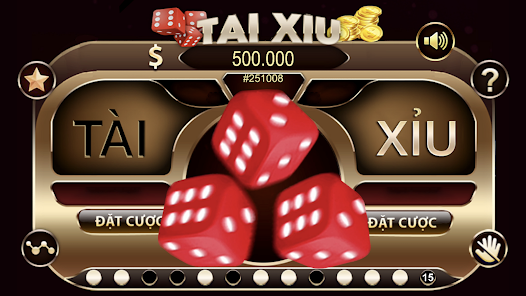
Tài Xỉu commonly refers to a dice-based big-or-small game, often associated with three dice and totals within defined ranges. A visitor who arrives via Go88 needs to understand exactly which outcomes qualify in the chosen version. Labels can look simple while exceptions, especially triples, change how a bet is settled.
The modern web makes access fast. Understanding what happens after a click still requires patient attention to details.
The three-dice foundation
In a common Sic Bo-style version, three six-sided dice generate totals from three through eighteen. Each die has six possible faces, producing 216 ordered combinations under the ideal fair model. Good comparisons use the same criteria on each option rather than switching standards midway. That approach makes it easier to notice missing explanations, conflicting instructions, or details that are presented as certain without supporting evidence.
Consider a realistic case: A total of ten can arise through several arrangements of three dice. A consistent process is more useful than a clever shortcut, especially when a request might later need review or correction.
Big and small are defined ranges
Many versions define small as totals four through ten and big as eleven through seventeen, with all triples excluded from ordinary big-small wins. Other variations can apply different rules. A visitor should also think about how the experience changes across devices, browsers, and account states. Instructions that work for one screen may not apply to another, so a reliable process leaves room to verify the current interface.
For example, a triple of four has a large sum but might still lose a standard big selection. Where money or personal information is involved, the cost of a misunderstanding can exceed the time saved by skipping the fine print. Read the exclusion note rather than interpreting the label literally.
The shape of total probabilities
Middle sums occur through more combinations than extreme sums. The distribution is not uniform across the sixteen possible totals, which matters when considering bets on exact totals. Useful online guidance allows for uncertainty. Interfaces and policies change, and different jurisdictions have different requirements; current official documents should outrank assumptions based on an older tutorial or an isolated anecdote.
A useful test before proceeding
The practical implication is visible here: A sum of ten is considerably more common than a sum of three with fair dice. Treat examples as illustrations, not promises. Real outcomes depend on the particular rules, software, circumstances, and applicable law.
Why the house edge exists
An advertised return is not automatically a fair return. The expected value depends on winning combinations, losing combinations, and any special exclusions included in the bet. A simple decision log can be surprisingly valuable: note the claim, identify where it appeared, and write down what would confirm or contradict it. That small discipline reduces reliance on memory or promotional language.
Consider a realistic case: A familiar nearly-even-chance wager may still favor the operator after the settlement rules. No design can remove every uncertainty, but clear disclosures can make remaining uncertainty easier to understand and manage. Calculate possible net gain or loss rather than focusing only on frequency.
Reading a wager panel
Digital interfaces may show total bets, recent outcomes, countdowns, and animations. These display elements can be useful for navigation but should not be confused with predictions. Careful evaluation does not require advanced technical knowledge. It requires attention to sequence: what happens before an action, what confirmation follows, what record remains, and what remedies exist if the expected result does not occur.
For example, a colorful history grid can encourage the belief that future rolls follow a pattern. The goal is not to turn every visit into an investigation; it is to spend attention where a wrong assumption would matter most.
Comparing game variations
Some versions add wagers on doubles, triples, single faces, or specific totals. More variety also creates more rule and payout details for a newcomer to read carefully. Think of this as an evidence problem rather than a branding problem. Reliable conclusions depend on verifiable details, documented procedures, and consistent treatment of ordinary users—not merely on confident descriptions.
The practical implication is visible here: A winning condition for an exact triple is different from choosing an individual face. In regulated or restricted activities, local eligibility rules take priority over marketing language or the apparent ease of access. Compare each wager independently rather than using one payout rule for all categories.
A practical decision matrix

| Topic to inspect | Common source of confusion | What to confirm |
|---|---|---|
| Big and small are defined ranges | A triple of four has a large sum but might still lose a standard big selection | Read the exclusion note rather than interpreting the label literally |
| the house edge exists | A familiar nearly-even-chance wager may still favor the operator after the settlement rules | Calculate possible net gain or loss rather than focusing only on frequency |
| Comparing game variations | A winning condition for an exact triple is different from choosing an individual face | Compare each wager independently rather than using one payout rule for all categories |
| Questions a reliable rule page answers | A disconnected session might complicate the display of a completed result | Find the settlement record and written support procedure before assuming a bet was void |
Choosing limits before a session
Dice games can move quickly, and frequent small bets can create a surprisingly large cumulative stake. Financial boundaries are an essential part of understanding the activity. This distinction becomes especially important when someone is moving quickly on a phone. A short pause to inspect the underlying detail usually prevents more confusion than a long search for a shortcut after something goes wrong.
The point behind the example
Consider a realistic case: Ten small wagers cost more than one wager of the same size even if none feels substantial. Treat examples as illustrations, not promises. Real outcomes depend on the particular rules, software, circumstances, and applicable law.
Key questions for the next step
- Set a fixed spend limit and avoid attempts to chase previous losses.
- Check whether a specific digital product follows this familiar format.
- Use an outcome table instead of assuming every printed number is equally likely.
- Separate information about prior rounds from information about the next random outcome.
Questions a reliable rule page answers
A readable guide should explain stake minimums, maximums, result generation, tie treatment, and what happens after interruption. It should not promise outcomes based on streaks or timing. The useful question is not whether the interface looks impressive. It is whether the information is clear enough that an adult can describe the procedure, the limits, and the consequences without having to guess at an essential step.
For example, a disconnected session might complicate the display of a completed result. If an action is difficult to undo, extra verification beforehand is a reasonable price to pay for avoiding an irreversible error. Find the settlement record and written support procedure before assuming a bet was void.
A dice example that reveals the trap
In the standard three-dice model, there are 216 ordered face combinations, but the totals are not equally common. A total of three can arise only as one-one-one, while a total of ten has many more combinations. At the same time, a wager labeled big can still exclude particular triples under some rules. These two details illustrate why reading only the number labels is insufficient. The sum distribution explains mathematical frequency; the game-specific exclusion clause explains whether a wager wins. Neither can be replaced by patterns drawn from recent rounds.
Closing Thoughts
Understanding a game starts with the actual settlement rules, not a chart of recent totals. The page identified as Tài Xỉu Go88 can be consulted for its current description, but readers should cross-check ranges, exclusions, payout examples, and the risks of repeated wagering.
Evidence, not urgency, should determine the next step.
