
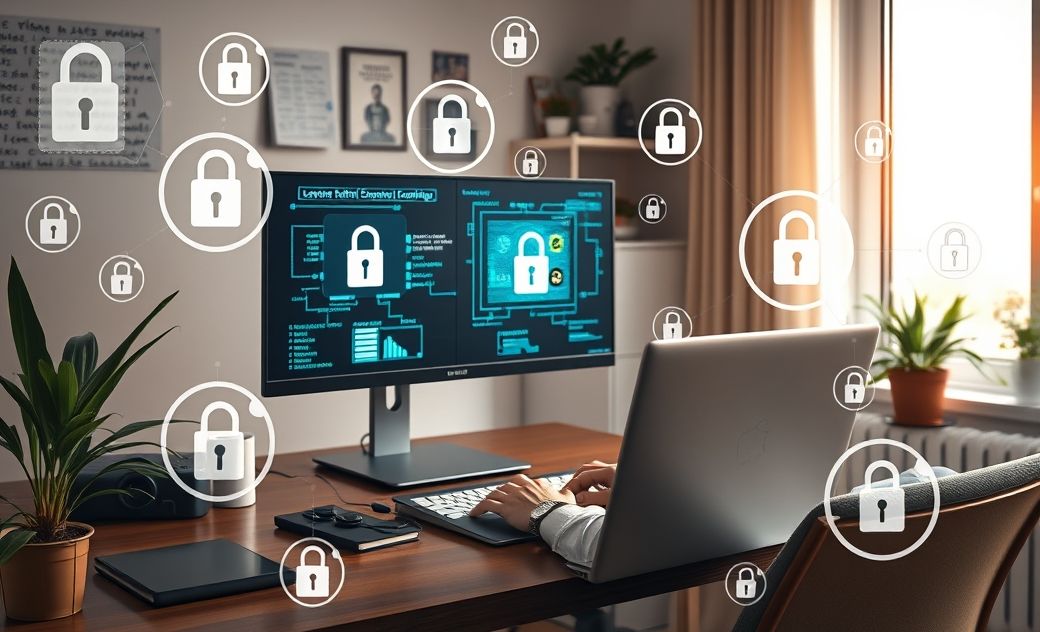
In recent years, the rise of remote work has introduced a myriad of opportunities and challenges for businesses worldwide. While remote work offers flexibility and increased productivity, it also opens the door to new cybersecurity threats. Protecting sensitive information and maintaining robust security postures have become paramount. In this article, we explore effective strategies to enhance cybersecurity in a remote work setting.
Understanding the Risks of Remote Work
Remote work can expose businesses to various cybersecurity risks due to the dispersed nature of operations. Without the controlled network environment of an office, employees may inadvertently create vulnerabilities.
Cyber Threats Faced by Remote Workers
Remote workers often face cyber threats such as phishing attacks, malware, and unsecured networks. Phishing attacks have become more sophisticated, targeting remote workers by mimicking legitimate business communication. Malware also poses a significant risk as unsecured personal devices are more susceptible to infection.
Data Breaches and Unauthorized Access
The risk of data breaches and unauthorized access increases as employees access company resources from multiple locations and devices. Without strong authentication measures, sensitive information is at risk of exposure.
Implementing Robust Security Policies
To mitigate these risks, companies must develop and implement comprehensive security policies tailored to a remote work environment. Security policies serve as a foundation for protecting assets and guiding employee behavior.
Setting Up Secure VPN Connections
Virtual Private Networks (VPNs) are essential for protecting data in transit. By encrypting internet traffic, VPNs ensure that confidential information remains secure from interception, even when employees use public Wi-Fi networks.
Adopting a Zero Trust Security Model
The Zero Trust security model operates on the principle of “never trust, always verify.” By continuously confirming the identity and health of devices and users, companies can strengthen their security posture and limit unauthorized access.
Enhancing Employee Awareness and Training
Employees play a crucial role in maintaining cybersecurity. Continuous training can empower staff with the knowledge to identify and mitigate potential threats.
Regular Cybersecurity Workshops and Drills
Organizing regular workshops and simulated attack drills can sharpen employees’ awareness and reactions to real-world cyber threats. These exercises should cover identifying phishing attempts, using strong passwords, and protecting personal and business data.
Creating a Culture of Security
Fostering a culture that prioritizes security involves regular communication and feedback loops with employees. Encourage staff to report suspicious activities without fear of reprisal and reward proactive behavior in maintaining security standards.
Utilizing Advanced Security Technologies
Integrating advanced security technologies can provide an additional layer of protection for remote work environments.
Implementing Endpoint Detection and Response (EDR)
EDR solutions offer real-time threat detection and response capabilities, allowing IT teams to quickly identify and neutralize cyber threats on employee devices. This reduces the risk of data breaches and enhances overall security.
Leveraging Multi-Factor Authentication (MFA)
Multi-Factor Authentication adds an extra layer of security by requiring multiple verification methods before granting access. This reduces the likelihood of unauthorized access, even if login credentials are compromised.
Conclusion
Cybersecurity in remote work environments is both a critical and complex undertaking. By understanding the risks, implementing robust security policies, enhancing employee awareness, and utilizing advanced technologies, businesses can create a secure framework for remote operations. As remote work continues to evolve, so too should our strategies to protect sensitive information and maintain business continuity.
