
Austin weather can be beautiful one week and punishing the next. Between intense sun, heavy rain, hail, and high winds, a roof has to do much more than complete the look of a home or business. It needs to protect the structure, support energy efficiency, and hold up through seasonal changes.
For property owners, the challenge is knowing when a roof needs attention and how to choose the right next step without feeling pressured or confused.
Why Roofing Decisions Should Start With an Inspection
Many roofing problems are not obvious from the ground. A few missing shingles may be easy to spot, but damaged flashing, poor ventilation, soft decking, or hail impact marks can go unnoticed until water enters the property.
A professional inspection helps determine whether the issue is isolated or part of a larger pattern. This matters because a small repair may solve one problem, while repeated repairs on an aging roof may simply delay the inevitable.
Common reasons to schedule an inspection include:
- Water stains on ceilings or walls
- Shingle granules collecting in gutters
- Missing, cracked, or curling shingles
- Leaks during storms
- Sagging roof areas
- Hail dents on gutters or vents
- Loose flashing near chimneys, skylights, or roof penetrations
- A roof that is nearing the end of its expected lifespan
A clear inspection report gives homeowners and business owners the information they need to make practical decisions.
Repair or Replacement: How to Think Through the Choice
Not every roofing issue requires a full replacement. If damage is limited to one section of the roof, a targeted repair may be enough to restore protection. This is often true for minor flashing problems, a few missing shingles, or a leak caused by a specific weak point.
Replacement becomes more realistic when the roofing system shows widespread wear. If shingles are brittle, leaks keep returning, or storm damage affects multiple slopes, continuing to patch the roof may become less cost-effective over time.
The decision usually depends on three questions:
How old is the roof?
An older roof with recurring problems may not be worth repeated repairs.
How widespread is the damage?
Localized damage may be repairable, while broad storm or age-related damage may call for replacement.
What is the long-term goal?
A homeowner planning to stay in the property for many years may value durability and peace of mind, while someone preparing to sell may focus on resolving visible concerns and inspection issues.
Working with an experienced Austin TX roofing contractor can help property owners compare these options in a practical, informed way.
Austin Weather Creates Unique Roofing Challenges
Central Texas roofs face a demanding mix of weather conditions. Heat can dry out roofing materials, UV exposure can accelerate aging, and sudden storms can expose weak points quickly. Hail and wind are especially important concerns because damage may not always cause an immediate leak.
A roof can appear functional after a storm while still having bruised shingles, lifted edges, or compromised flashing. Over time, those small vulnerabilities may allow water intrusion.
This is why storm follow-up matters. After severe weather, property owners should look for visible warning signs around the home, such as fallen shingles, loose gutters, debris on the roof, or new stains inside. Even if everything looks normal, an inspection may be worthwhile after major hail or wind events.
Materials and Ventilation Matter More Than Appearance
Curb appeal is important, but roofing performance depends on more than color and style. The quality of materials, installation method, underlayment, flashing, and ventilation all influence how long a roof lasts.
Proper attic ventilation is especially easy to overlook. Without balanced airflow, heat and moisture can build up beneath the roof deck. This may shorten shingle life, affect indoor comfort, and contribute to moisture problems.
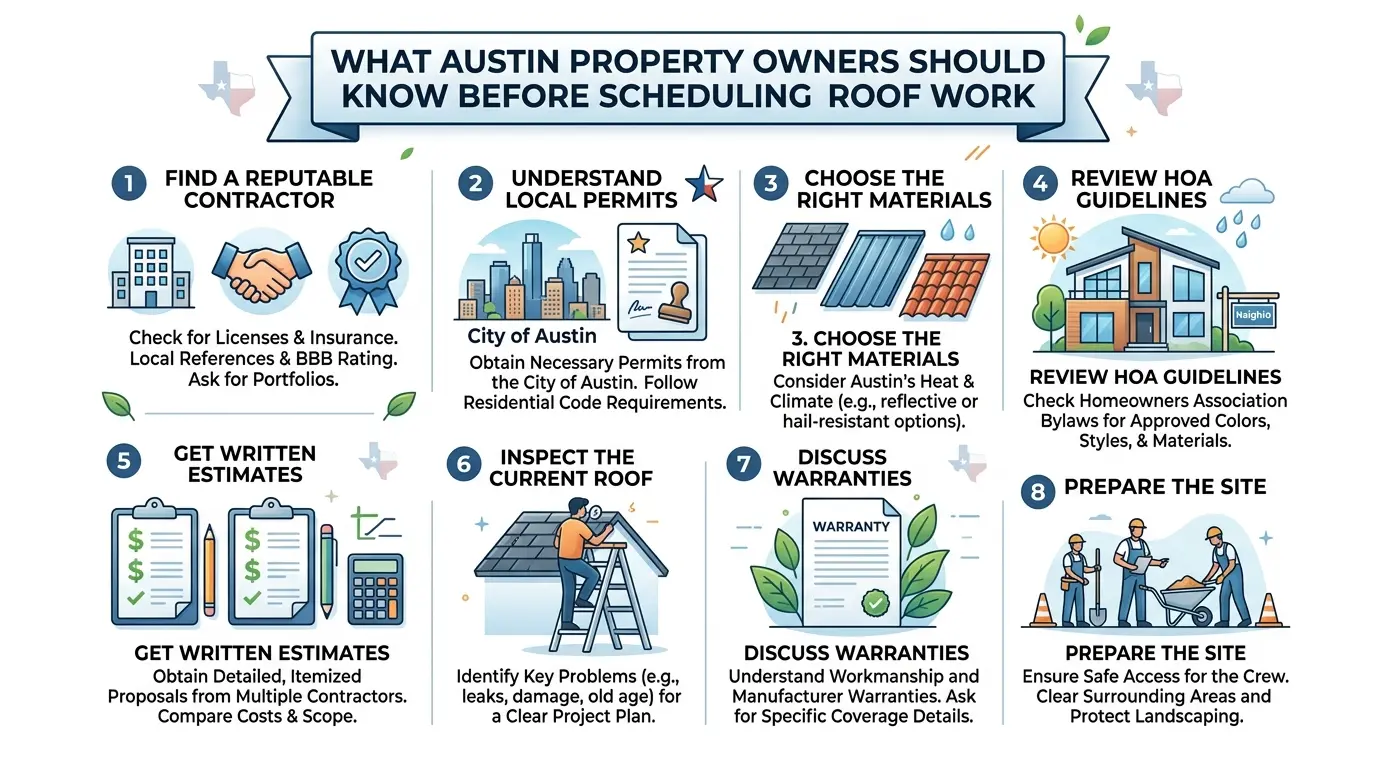
When comparing roofing options, property owners should ask about:
- Material durability
- Wind and impact resistance
- Ventilation design
- Flashing details
- Manufacturer warranty terms
- Workmanship warranty coverage
- Cleanup and debris removal
- Timeline and weather delays
The best roofing decisions balance appearance, budget, durability, and local climate needs.
Commercial and Residential Roofs Require Different Planning
Homeowners and business owners often have different priorities. Residential roofing projects usually focus on family comfort, curb appeal, resale value, and protection from leaks. Commercial roofing projects may also involve business continuity, tenant safety, equipment protection, drainage, and scheduling around operations.
For businesses, planning is especially important. A roofing project may need to be coordinated to reduce disruption for employees, customers, or tenants. Clear communication about access points, noise, parking, and safety zones helps keep the project organized.
For homeowners, preparation may involve moving vehicles, protecting items in the attic, taking down fragile wall décor, and making arrangements for pets or children during noisy work periods.
How to Prepare for a Roofing Project
Good preparation can make a roofing project smoother from start to finish. Before work begins, property owners should understand what will happen on-site and what they need to do beforehand.
Helpful preparation steps include:
- Move vehicles away from the driveway and work area.
- Clear patio furniture, grills, and potted plants from around the home.
- Protect fragile items stored in the attic.
- Remove delicate wall decorations that may shift from vibration.
- Let neighbors know about temporary noise.
- Confirm where materials and disposal containers will be placed.
- Review the project schedule and communication process.
Roofing work is temporary, but it can be disruptive. A little planning helps reduce stress and prevents avoidable delays.
The Value of Clear Communication
A roof is a major investment, so property owners should never feel left in the dark. A reliable roofing process includes clear explanations, written estimates, realistic timelines, and direct answers to questions.
Good communication should cover what the contractor found, what options are available, why certain recommendations are being made, and what the finished project should include. This is especially important after storm damage, when property owners may feel rushed or uncertain.
The goal is not just to complete a roof repair or replacement. The goal is to help the property owner understand the condition of the roof and feel confident about the next step.
Conclusion
Roofing decisions are easier when property owners understand the basics: inspect early, address storm damage promptly, compare repair and replacement options carefully, and prioritize materials and installation quality over surface-level appearance.
Austin’s climate can be tough on roofing systems, but proactive maintenance and thoughtful planning can extend roof life and help prevent expensive damage. Whether the property is a home, rental, or commercial building, the right roofing approach protects more than the structure itself. It protects comfort, value, and long-term peace of mind.
