
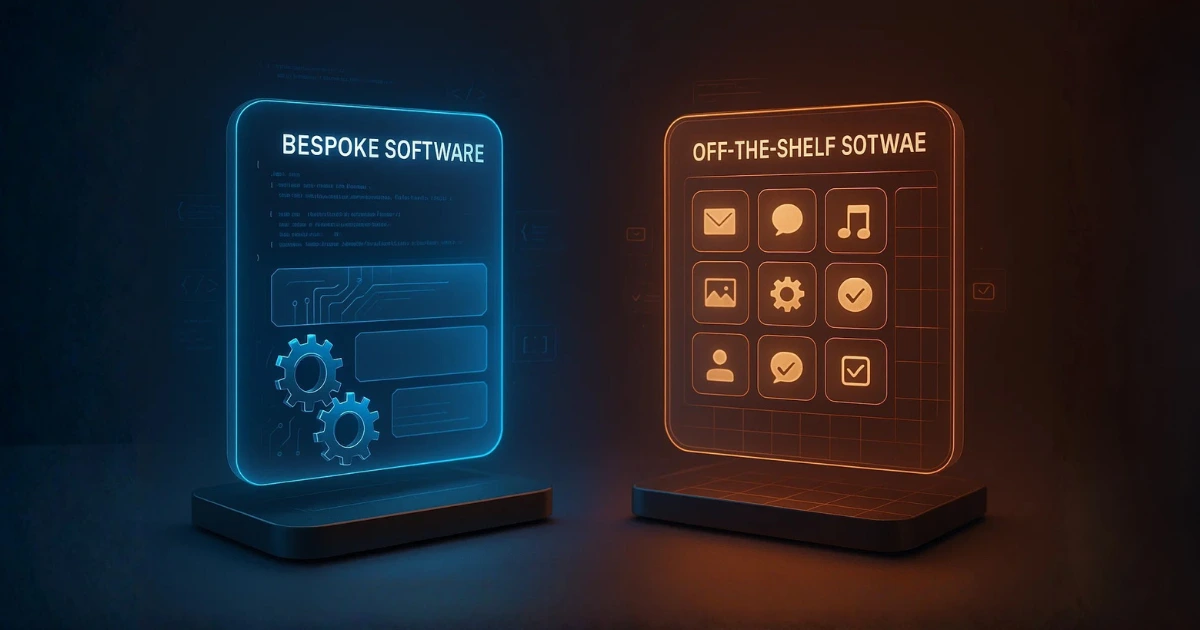
For many UK businesses, software decisions used to be straightforward. You bought a system, configured it as best you could, and adapted your processes around it. That approach worked when markets were slower moving and digital expectations were lower.
Today, it feels increasingly outdated.
As organisations face pressure to operate more efficiently, respond faster to customers, and extract real value from their data, the limitations of generic software are becoming harder to ignore. In response, more companies are turning towards custom software development, not as a technical indulgence, but as a strategic necessity.
When “Good Enough” Stops Being Enough
Off-the-shelf platforms are designed to satisfy the widest possible audience. That broad appeal is their strength, but also their weakness. While they may support standard workflows, they rarely align perfectly with how a business actually operates day to day.
Over time, compromises creep in. Teams rely on workarounds. Manual processes fill the gaps. Integrations become fragile. What once felt like a sensible purchase slowly turns into an operational constraint.
This is often the point at which leadership teams start asking more fundamental questions. Why are systems dictating how we work, rather than enabling it? And what would it look like if our technology reflected our business, instead of the other way around?
The Case for Bespoke Development
Custom software offers a different proposition. Rather than adapting processes to fit a tool, the tool is designed to fit the organisation.
That distinction matters. A well-designed bespoke system mirrors real workflows, incorporates existing data structures, and supports the decisions people actually need to make. It can be built to integrate seamlessly with current platforms while remaining flexible enough to evolve as the business grows.
For UK organisations operating in competitive or regulated environments, that flexibility is particularly valuable. Custom development allows teams to respond to change without waiting for vendor roadmaps or compromising on compliance, security, or performance.
From Idea to Application
One of the persistent myths around bespoke software is that it is unpredictable or difficult to manage. In reality, modern development practices have brought structure and transparency to the process.
Successful projects begin with a clear discovery phase, where technical and business stakeholders work together to define requirements, constraints, and long-term goals. This is not simply about listing features, but about understanding how the system will be used, who it will support, and how it fits into the wider technology landscape.
Development itself is typically iterative. Rather than waiting months to see results, stakeholders review progress regularly, refining priorities as the solution takes shape. This collaborative approach reduces risk and ensures the final product delivers genuine value.
Organisations such as Transparity specialise in this end-to-end approach, helping businesses design, build, and evolve software that supports real operational needs rather than abstract technical ideals. Their focus on collaboration and long-term outcomes reflects a broader shift in how custom software is delivered today.
Beyond Launch Day
Another misconception is that bespoke software is “finished” once it goes live. In practice, the opposite is true. The most effective systems are treated as living assets.
Post-launch support, performance monitoring, and incremental enhancement are all part of ensuring software continues to meet business needs. As organisations introduce new services, expand into new markets, or adopt new technologies, custom systems can adapt without wholesale replacement.
This long-term perspective is especially important for corporate decision-makers looking to justify investment. When software is built to evolve, its value compounds over time rather than depreciating.
A Competitive Advantage Hiding in Plain Sight
What’s often overlooked is how directly bespoke software can influence competitive advantage. Faster internal processes, better visibility of data, and systems that genuinely support staff all translate into improved customer experiences.
In sectors where differentiation is difficult, operational excellence becomes a defining factor. Custom software enables organisations to embed that excellence into the fabric of their operations, rather than relying on people to compensate for system shortcomings.
It also empowers teams. When technology supports rather than obstructs, employees spend less time navigating systems and more time delivering value.
Making an Informed Decision
Custom development is not the right answer for every challenge, but it is increasingly the right answer for organisations whose processes, scale, or ambitions exceed what standard platforms can comfortably support.
The key is approaching the decision strategically. Leaders should consider where existing systems create friction, where future growth may introduce complexity, and how technology can actively support business objectives rather than simply maintaining the status quo.
When those questions are asked honestly, bespoke software often emerges not as a luxury, but as a practical, forward-looking investment.
For UK organisations navigating complex digital demands, the question is no longer whether custom software has a role to play. It’s whether continuing to rely on tools that weren’t built for the business makes sense at all.
